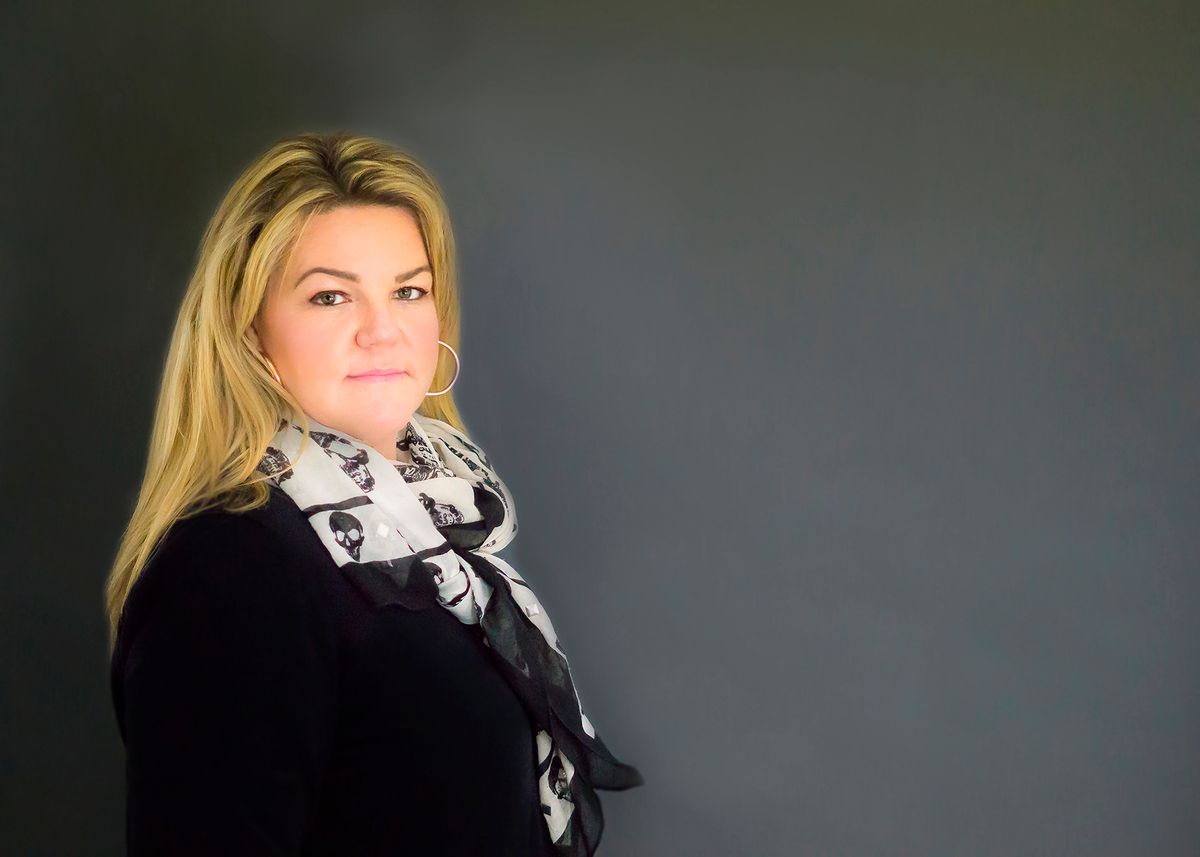
Have no fear, however, you can now find members of our wonderful RANGE family at RANGE Media Company -- if you need me, send to [email protected].
Need help with subscriptions, merchandise, calendar orders, or any number of the many ways you reach out to us, you can find help in the lovely, Christina at [email protected].
If you have a story idea or a letter, please send to our editorial staff at [email protected] and they’ll be happy to help you.
If you would like to know more about the foundation or want to join our efforts to preserve rural journalism, reach out to Carol at [email protected].
We’re looking forward to continuing the long relationship with our readers and getting to know our new supporters and contributors.

From Jack Payne in Nevada
From our newest beat reporter, a report on the fires raging across the West…
By Bridgette Williams
By mid-August, you didn’t need a fire map to know much of the West was burning.
Smoke has hung over communities from Oregon to Nevada, lightning has started new fires across dry rangeland, and millions of acres have already burned across the region.
Oregon has taken one of the hardest hits. By early August, roughly 2 million acres had burned there, already surpassing the state’s record-setting 2024 season, with weeks of fire weather still ahead.
But the damage on the ground is more than just reported acreage on a map. Wildfires have burned grazing ground, damaged ranch infrastructure, threatened water supplies and displaced livestock. At the massive Big Grass Fire along the Oregon-Idaho border, ranchers were dealing with burned rangeland and cattle killed or injured by fire, smoke and extreme heat.
Once the flames are out, the problem doesn’t end. Burned federal grazing allotments may be closed while landscapes recover, leaving ranchers scrambling to find somewhere else to put cattle.
Nevada has been getting its share, where a woman has been arrested for intentionally starting the Bug Fire, which exploded along the Nevada-California line, ultimately burning more than 93,000 acres and forcing evacuations north of Reno. The neighboring Stallion Fire added another major incident to an already stretched fire response system. By mid-August, firefighters had made substantial gains on both fires and residents were beginning to return home.
For ranchers, the calculation is immediate — cattle, fences, water, hay, grazing permits and whether there will still be feed standing when the fire is over.
And August isn’t the finish line – fire danger typically remains high well into September across much of the Great Basin. For communities watching smoke settle into the valleys again this summer, there is still a lot of fire season left.
Feds Fight Fire by Creating a New Agency
By Bridgette Williams
Brian Fennessy has spent decades around wildfire, from fire rescue in Southern California to aviation, emergency response and work with the Bureau of Land Management and U.S. Forest Service.
Now he has a new job: building the U.S. Wildland Fire Service.
Created at the beginning of 2026, the new service is intended to bring several federal wildfire programs under one management structure and improve what has long been one of the toughest parts of fighting fire on public lands: getting everybody on the same page quickly.
“Wildfire response depends on coordination, clarity and speed,” Fennessy said in announcing the early planning effort.
Which is the idea behind the new agency – until now, wildfire responsibilities within the Department of the Interior have been spread among six different offices and agencies, including the Bureau of Land Management, Bureau of Indian Affairs, U.S. Fish and Wildlife Service, National Park Service, Office of Aviation Services and Office of Wildland Fire.
Those agencies have worked together for years, but multiple chains of command often mean more communication, more approvals and more opportunities for resources to be delayed when a fire is moving fast. This new Wildland Fire Service is supposed to simplify that.
The mission goes beyond putting out fires. The agency is also charged with reducing wildfire risk before ignition through fuels management, creating more fire-resilient landscapes, improving wildfire science and technology and working with communities to prepare for fire.
That shift comes as large western fires continue to threaten ranches, forests, water supplies, infrastructure, energy systems and rural economies. Oregon has suffered over two million acres burned by August this year, surpassing the record set in 2024.
The service will still work alongside the U.S. Forest Service, tribes, states and local fire agencies, but Interior officials say putting its own wildfire programs under one roof should make it easier to move people and equipment where they are needed.
For ranchers and rural communities, that is the real test.
Nobody on the ground cares much which federal office owns the paperwork when a fire is coming over the ridge. They care whether crews arrive, whether aircraft can be deployed, whether somebody has authority to make a decision, and whether preventable acres are lost while agencies sort out who is responsible.
Fennessy says the goal is to build a system that better supports both firefighters and the communities they serve.
Watching the USDA and SBA attack lawfare…
The Executive Branch is putting new machinery behind an issue rural landowners have complained about for years: being outgunned by government agencies, environmental groups and regulatory systems they cannot afford to fight.
At a signing ceremony at USDA headquarters in July, Agriculture Secretary Brooke Rollins and Small Business Administration chief Kelly Loeffler signed a memorandum of understanding creating a joint effort to review complaints from farmers, ranchers and small businesses alleging regulatory overreach, targeted enforcement and what the administration describes as “lawfare.”
The agreement builds on USDA’s Lawfare Portal, which Rollins said has received more than 600 submissions from producers in 47 states since its launch.
Under the new arrangement, USDA will remain the front door for complaints, while SBA’s Office of the National Ombudsman will help investigate cases involving other federal agencies. The agencies say they will also look for broader patterns of alleged abuse and coordinate with Interior, EPA, the Department of Justice and other federal departments.
Rollins framed the effort around private property rights and the ability of producers to stay on the land.
“This is about getting the government off the backs of our producers,” she said.
Several ranchers were invited to tell their own stories during the ceremony.
Arizona rancher Chris Heaton said a national monument created in 2023 now overlays his ranching operation and has left him uncertain about what activities could trigger penalties, including maintenance of water infrastructure and grazing. He said litigation challenging the monument was recently dismissed for lack of standing and that he is considering next steps.
Fellow Arizona rancher Casey Murph said state land used by cattle producers is increasingly being considered for large-scale solar development. He argued that removing large areas from agricultural production could have long-term consequences for domestic food production.
New York farmer Alex Fasulo described her fight against the state’s renewable-energy siting process, arguing that rural communities have lost meaningful control over local zoning and land-use decisions.
The administration also brought in country singer John Rich, recently appointed as a special envoy for American landowners, to help surface cases that might otherwise remain local. Rich said his role is to find landowners telling their stories publicly, connect with them directly and bring their cases to the appropriate federal officials.
The administration’s use of the term “lawfare” is broad and controversial. Environmental organizations and government agencies often argue that permitting, conservation rules and litigation are necessary tools for protecting public resources and enforcing existing law. But the producers at the ceremony said the practical problem is the cost and time required to fight decisions they believe threaten their operations.
Loeffler said some cases can take years and cost millions of dollars, resources few family operations have.
Our friends at Lonesome Lands – Shad Sullivan and Jim Mundorf then sat down with the Secretary for a chat…
Agriculture Secretary Brooke Rollins sat down with the Lonesome Lands podcast from the Minnesota family farm where she spent her summers growing up.
Rollins spent much of the interview talking about the pressure points facing American cattle producers, including the reopening of the Mexican border to cattle, the continuing fight against New World screwworm, and the push for mandatory country-of-origin labeling.
On the border question, Rollins said the issue before USDA was not whether Mexican cattle should be imported at all, but when it was safe to resume movement through the ports.
USDA had closed the ports for roughly 14 months as New World screwworm moved north through Mexico. Rollins said that pause gave the United States time to prepare expanding sterile-fly production, speeding approval of treatments, establishing dispersal facilities and deploying drone technology to monitor wildlife.
She said the decision to reopen a port in Arizona came after officials determined the immediate risk there was sufficiently low, while emphasizing USDA will continue evaluating conditions.
Rollins also offered an update on screwworm response in Texas. She said all animals involved in the confirmed cases discussed during the interview had survived, and USDA has been using drones and artificial intelligence to monitor tens of thousands of wild animals for signs of infection.
The agency’s strategy relies heavily on sterile flies, which are released around confirmed cases to disrupt reproduction of the parasite.
Rollins left little ambiguity about where she stands on mandatory country-of-origin labeling. “I am 100% in support of mandatory country of origin labeling,” she said.
She argued consumers should be able to tell where their beef comes from and said country-of-origin labeling fits with the administration’s broader effort to encourage rebuilding the domestic cattle herd, which she noted remains at historically low levels.
Throughout the interview, Rollins returned to the same theme: she wants USDA policy centered more directly on farmers and ranchers.
Whether producers agree with every decision coming out of Washington or not, the conversation gives a useful look at how the secretary is thinking through some of the biggest issues currently facing the cattle industry.
The full interview is worth a listen at Lonesome Lands.
The Intern on Beef
A last word from our intern as he leaves us for college…
By Riggin Stonebarger
Beef has been part of the American diet for generations, and for good reason. It is one of the most nutrient-dense foods we can put on the plate.
A three-ounce serving of beef provides about 22 grams of complete protein, meaning it contains all the essential amino acids the body needs to build and repair muscle, support the immune system and keep everything working the way it should. Beef is also an excellent source of vitamin B12, zinc, iron, selenium and other nutrients that can be harder to get in sufficient amounts from plant foods alone.
That doesn’t mean every beef product is created equal. There is an important difference between fresh beef and heavily processed meats, and how you cook it matters too. Lean cuts, sensible portions and avoiding the blackened-to-a-crisp approach are probably good rules of thumb.
The bigger point is one we seem determined to make complicated: beef can absolutely be part of a healthy diet.
And there’s another side to this conversation that matters in cattle country.
The U.S. cattle herd remains near historic lows, while Americans continue to want beef. That combination has driven cattle prices higher and finally given many cow-calf producers some breathing room after years of difficult margins. At the same time, policymakers are debating whether increased imports or efforts to rebuild the domestic herd offer the better long-term answer.
From where I sit, strengthening American cattle production makes a lot of sense. A country that can feed itself is in a stronger position than one increasingly dependent on somebody else to do it.
That means keeping ranch families on the land, maintaining a healthy domestic cattle herd and recognizing that food security starts long before anything reaches the grocery store.
Nutrition debates will continue, as they always do. But beef brings a tremendous amount of nutrients to the table while supporting an industry woven deeply into rural America.
So choose a good cut, don’t burn it to a hockey puck, add a few vegetables if it makes you feel responsible, and enjoy dinner. Eat U.S. beef.
Before you go…
If you like what RANGE is doing, there are two very practical ways to keep us doing it.
First, wear the brand. We’ve got RANGE shirts, hats, calendars and all kinds of good stuff over at Great Basin Trading Co. Go poke around and find something you can’t live without:
And second — subscribe.
Better yet, subscribe and send RANGE to somebody who ought to be reading it. Your neighbor. Your kid off at college. Your county commissioner. Your city cousin who still thinks hamburger comes from the grocery store.
Every subscription helps us keep reporters in the field, pages coming off the press and rural stories in front of people who need to hear them.
A sincere thank you to everyone who has joined us in supporting the RANGE Community Foundation. Your contributions help make it possible for us to keep reporters in the field, preserve rural stories and make sure these communities have a voice. If you’d like to be part of that work, we’d be honored to have you alongside us.
As my dad always says, “We’ve got a lot of work to do -- Load up.”